
The promotion worked.
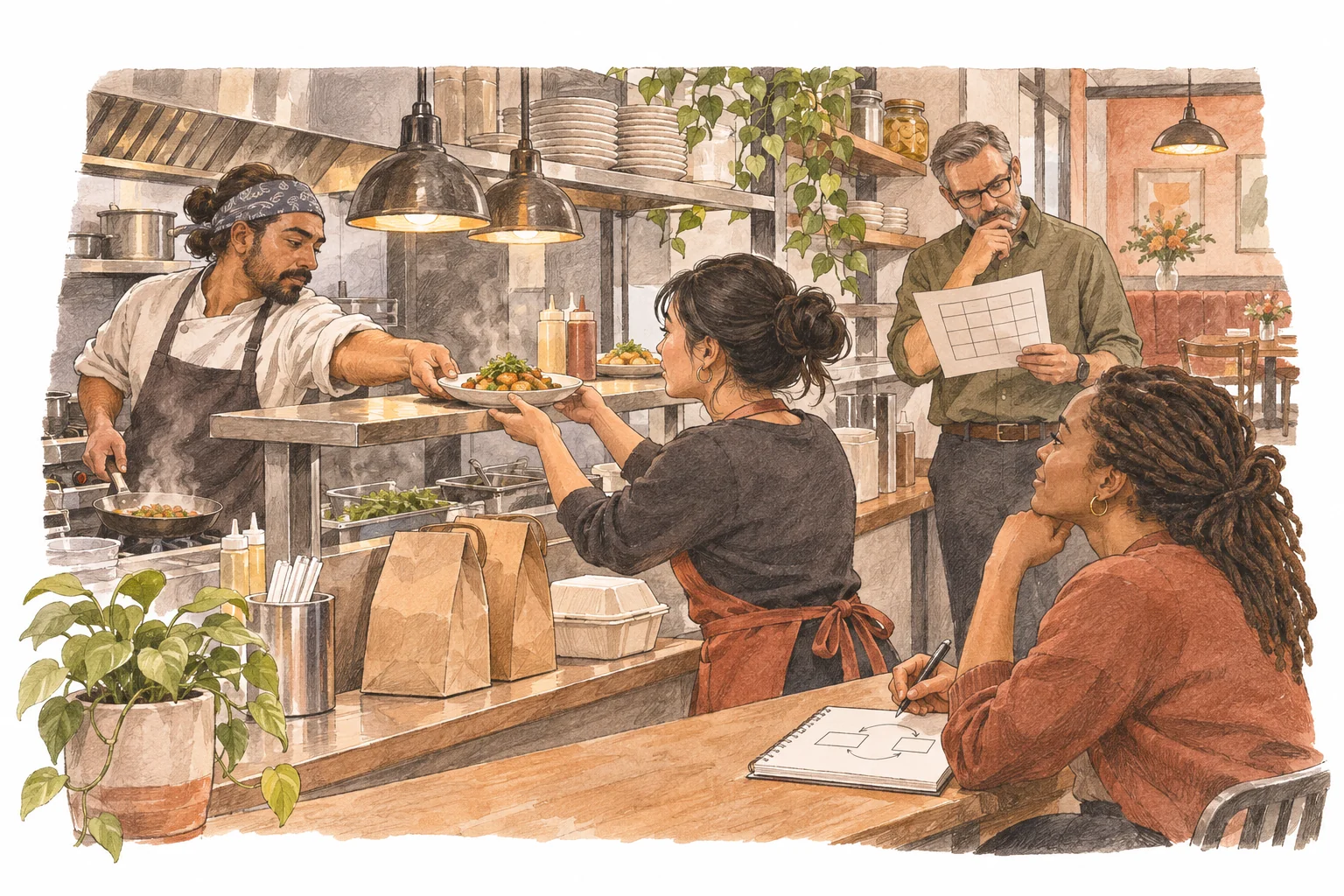
By six o’clock, the restaurant had more orders than the kitchen could fill. Customers were waiting at the counter. Delivery drivers were checking their phones. Someone had promised that every order would be ready in twenty minutes.
The marketing team had a chart showing that the campaign was a success.
The kitchen manager had a different view.
Imagine placing that situation in front of a classroom. Give one group the campaign results. Give another the staffing schedule. Give a third the ingredient costs and the prices customers actually paid. Ask someone to represent the employees who will have to stay late.
Then ask them to decide what happens next.
They could stop the promotion. They could limit orders. They could change the menu, offer refunds, or ask customers to wait. Each choice would solve something. Each would also create a problem someone else would have to handle.
To make a useful recommendation, they would need knowledge. They would need to understand costs, capacity, communication, and customer expectations. They would also need to discover which facts were missing and whose experience they had overlooked.
A student who could explain profit margin might have to use that concept to challenge a popular proposal. A student who understood staffing might need to explain why an apparently simple solution would fail. Someone would have to ask whether the restaurant had made a promise it could not keep.
This is the kind of moment I want education to make room for.
The instructor could pause the discussion and teach a concept the group needs. Students could investigate an assumption, compare alternatives, or explain a decision in writing. When new information arrived, they could return to their recommendation and decide whether it still held.
The experience would give them something specific to reflect on: what they noticed, what they assumed, whom they listened to, and why they chose to act.
The restaurant could be fictional. The work of reasoning together would be real.
— From the introduction to Enter the Possible